
B&H Photo Video began a modernization initiative to move away from a legacy Informix-4GL ERP environment and make its application portfolio easier to understand, maintain, and evolve. Serving as Software Engineering Lead for the UNIX Applications Development team, Andrew Burnheimer helped connect technical strategy with practical delivery.
Challenge
The modernization effort had to also support ongoing delivery. Engineers needed to understand unfamiliar legacy code quickly, reduce regression risk, and establish repeatable practices for testing, branching, automation, and release management. Investments to application security were to be incorporated as well: legacy source code and scripts required analysis and remediation to remove exposed secrets and reinforce safer secret-management practices before the code could be lifted-and-shifted to a cloud-based repository.
The existing portfolio included more than 4,200 legacy applications across 15 business modules. Before individual applications could be modernized responsibly, the team needed a clearer view of code complexity, application age, build status, execution history, and source-control readiness.
At the product level, the team needed to demonstrate what a more modern user experience could look like without treating a prototype as a complete replacement for the existing ERP. A mobile-friendly application could make the future direction tangible while the broader portfolio was still being assessed.
What we did
The work was organized across several connected stages.
1. Secure Legacy Code Practices
Designed a method to analyze and remediate exposed secrets that had leaked through the legacy codebase.
Created a shared library usable from the Informix runtime and from PHP, Python, Bash, and other script interpreters.
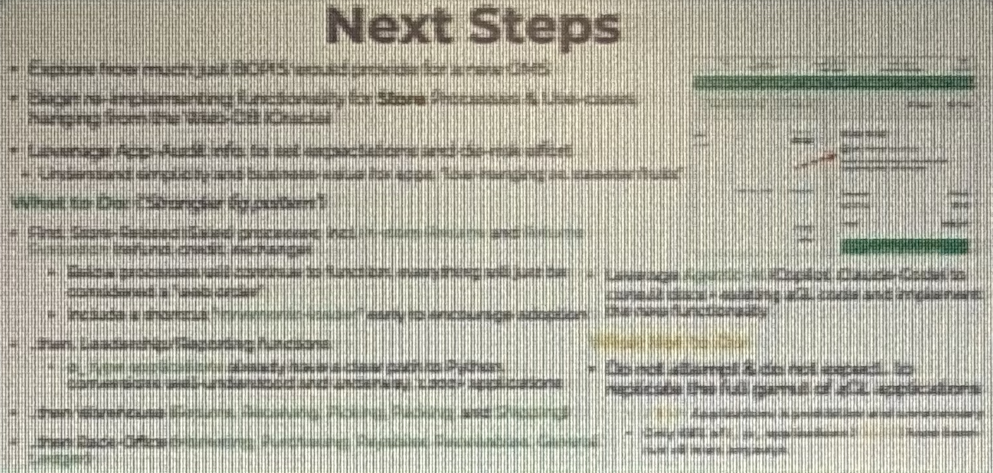
2. Roll-out AI-Assisted Development (AIDLC)
Introduced generative AI-assisted development workflows using Copilot and Claude for 16 developers and 7 QA engineers.
With a sanitized codebase, it could be gently conditioned and raised in to the Copilot ecosystem. Retrieval-Augmented Generation and LLM evaluation, prompt and context engineering were performed, and document-processing pipelines created.
3. Delivery and Modernization Foundations
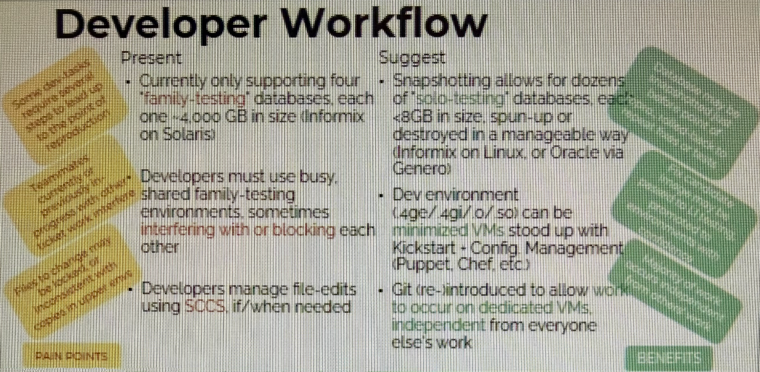
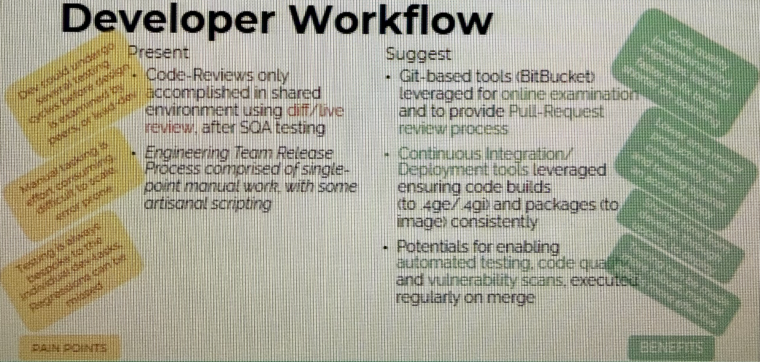
A branching workflow, automation, GitHub Actions CI/CD, and a method for maintaining retrieval-augmented generation were put in place.
Besides improving release consistency, the AI-enabled development lifecycle was now supported.**
4. Legacy Application Analysis
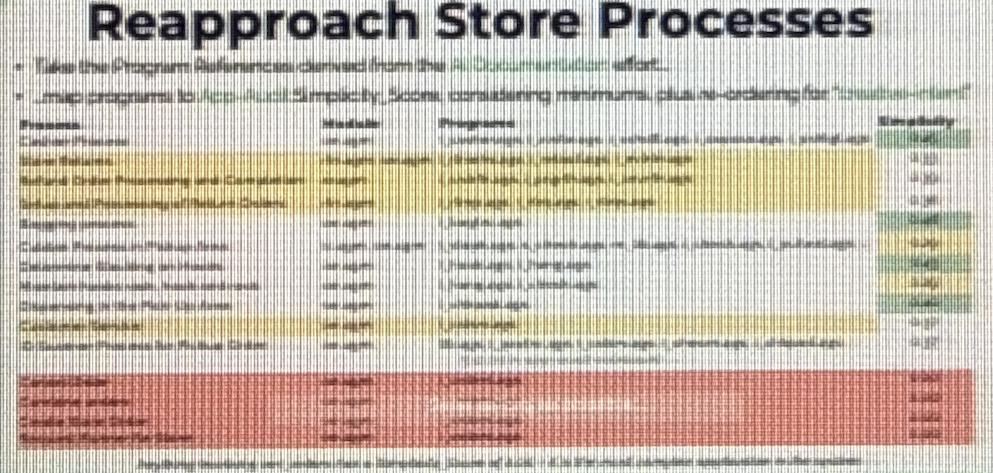
4,200 applications across 15 business modules were examined.
Python-based source-code analysis tooling was developed and Jupyter notebooks were used to treat the legacy portfolio as data. Those tools routinely executed against the actively developed codebase, with the data analyzed and findings summarized to guide modernization priorities.
5. Develop Modern Mobile Prototype
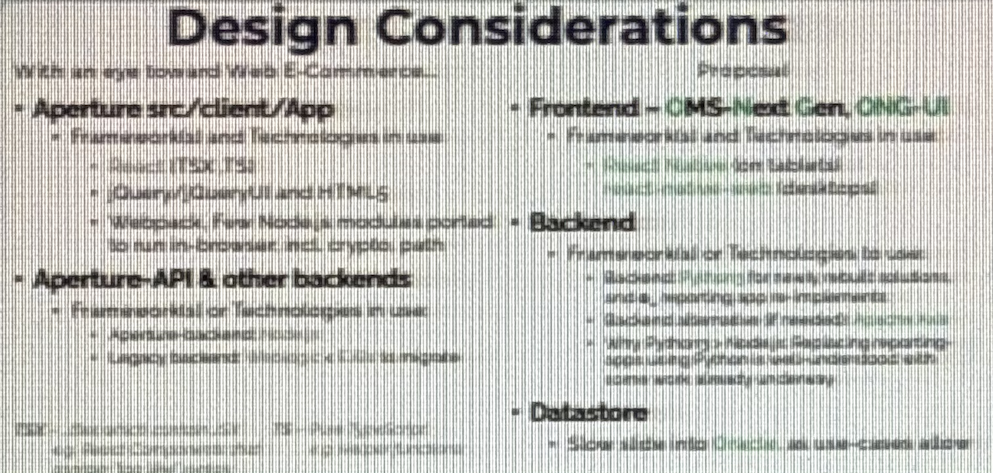
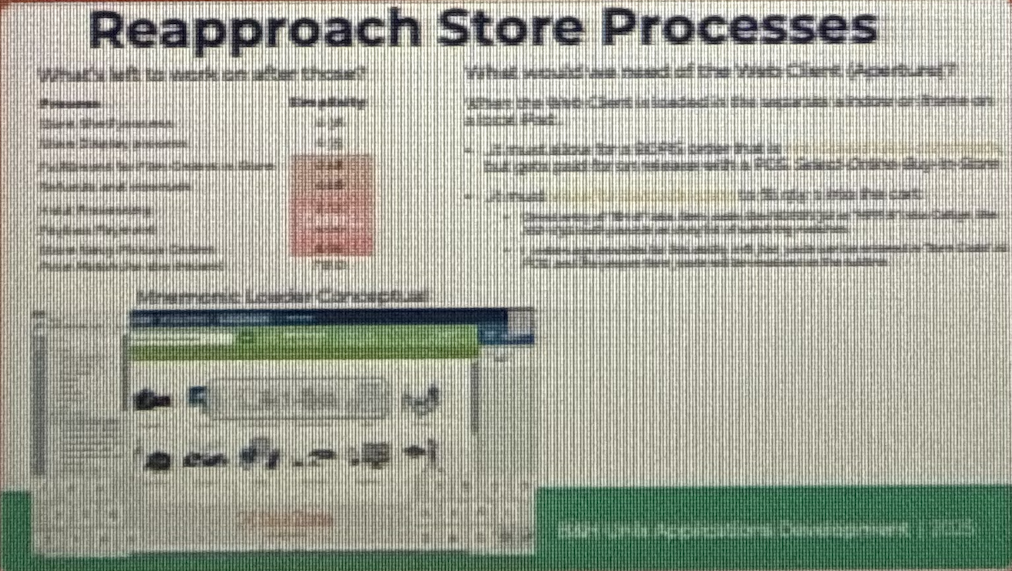
Developed a React Progressive Web Application (PWA) prototype order management system for mobile devices.
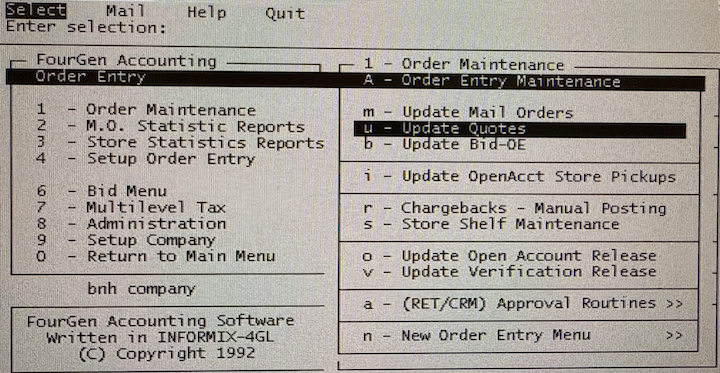
The concept was proved further by porting to React Native. This prototype ran on large and small-screen mobile devices to provide a modern in-store experience to replace the TUI that is aging, inflexible, and costly to maintain.
Example Images
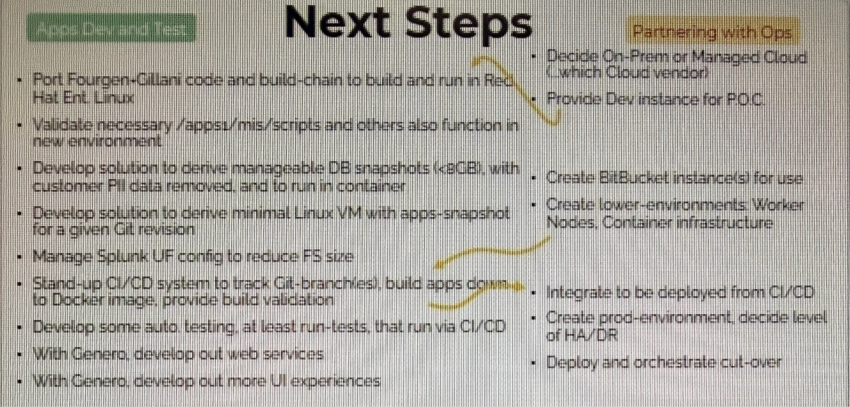
Images illustrating the legacy system meant to be replaced, results of the developer workflow and modernization analyses, and design considerations for the mobile prototype: (Note: many details have been intentionally obscured)
Results
The work showed that legacy modernization benefits from a measured path rather than a single replacement project. Portfolio analysis made the scale and condition of the application estate visible, while a modern prototype provided a concrete way to evaluate future user experiences. In parallel, AI-assisted development, secure secret-management practices, and improved delivery automation would help the team work more effectively during the transition.
Conclusion: Establish an evidence-based modernization roadmap while continuing to improve the tools, practices, and prototypes that make future migration safer. Here is a list of deliverables B&H Photo Video received through the effort:
- Improved source-control, branching, automation, and GitHub Actions CI/CD practices.
- AI-assisted development workflows for developers and QA engineers.
- A method and shared library for managing application and script secrets in a secure way.
- Python and Jupyter tooling for analyzing the source code of the 4,200+ legacy applications.
- Modernization metrics across 15 business modules of the legacy system.
- A React/TypeScript progressive web application prototype Order Management System interface for mobile use on the showroom floor.
- A path toward React Native for continued mobile development.
Client Experience
“Andrew came to quickly understand our application development and execution environments, our specific SDLC, delivery, and deployment business processes, and used his advanced analysis techniques in the domains of infosec and software maintainability to advance the way our team delivers code” -Randall J., Systems Architect and Sprint Manager, Unix Applications
Takeaway
Modernization does not have to begin with a risky, all-at-once replacement. A large legacy portfolio can first be measured, mapped, and prioritized. Prototypes can then test a better user experience while the organization strengthens its engineering practices and prepares the systems behind it.
The most useful modernization plans connect application analysis with delivery realities. Understanding code complexity and execution history is valuable, but so is improving the day-to-day ability of engineers and QA teams to understand, change, test, secure, and release that code.
Want This Kind of Analysis for Your Business?
If your business relies on a large legacy application portfolio, manual release processes, or systems that are difficult to understand and modernize safely, Triple Speed Technology can help you assess the current state, prototype a practical path forward, and build the engineering foundations needed for change.
Contact Triple Speed Technology to start a conversation about your legacy ERP, application modernization, AI-assisted development, or custom application needs.